
Cranial Osteopathy in Autism
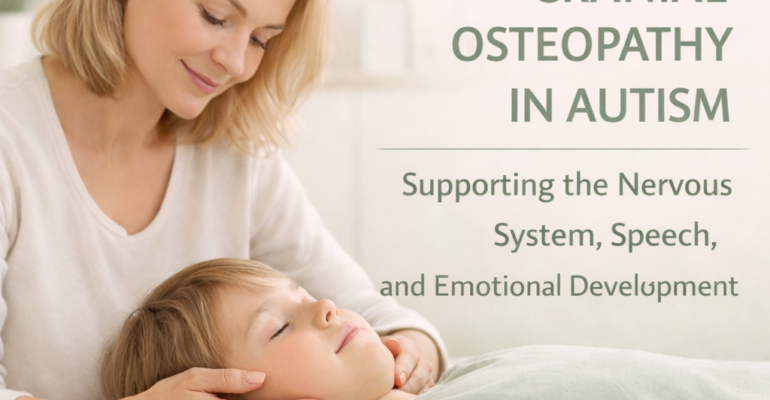
Cranial Osteopathy in Autism
 valentinamicaj64@gmail.com
 Supporting the Nervous System, Speech, and Emotional Development
When parents of a child with autism spectrum disorder bring child to my sessions, I always begin with one essential point: we do not treat autism. We support the nervous system.
Autism is a neurodevelopmental condition. However, many children with ASD experience dysregulation of the autonomic nervous system. A child may be constantly tense, hypersensitive to sound and light, sleep poorly, struggle with digestive issues, and have difficulties with speech and social contact. The body often seems to live in a state of internal тревогу—continuous alertness.
This is precisely the state I work with as a craniosacral therapist and osteopath.
Modern neurophysiological research suggests that many children with autism show an imbalance between the sympathetic and parasympathetic nervous systems, reduced heart rate variability, and increased reactivity to stimuli. This means the organism frequently operates in a protective mode. And when the body is in protection, development slows down.
Speech, social interaction, and learning all require a sense of safety. When the body does not feel supported, the brain cannot fully engage in development.
Cranial osteopathy in autism focuses on gently regulating the nervous system through the body. We work with the mobility of the cranial bones and sacrum, the diaphragm, fascial tension patterns, the region of the vagus nerve, the rib cage, and the cervical spine.
The goal is not to “fix” the child. The goal is to reduce internal tension and create conditions for self-regulation.
As the nervous system gradually shifts out of chronic overload, parents often begin to notice changes: the child sleeps better, sustains attention longer, becomes calmer, establishes eye contact more easily, shows reduced sensitivity to noise, and experiences improved digestion.
And sometimes, speech begins to emerge.
I remember a four-year-old boy diagnosed with ASD. He had no functional speech—only isolated sounds. He avoided eye contact, frequently covered his ears, slept restlessly, and had significant digestive issues. His abdomen was tense, and his entire body reflected a state of constant guarding.
At our first session, his system felt held and rigid. His neck was tight, the rib cage restricted, the sacrum limited in mobility, and the diaphragm seemed almost fixed. Everything indicated that his organism was functioning in continuous protection.
We began with very gentle work—balancing the cranium and sacrum, releasing the diaphragm, reducing tension at the base of the skull, and supporting freer breathing through the rib cage.
Alongside bodywork, I selected individualized Bach flower essences to help reduce internal fear, hyperreactivity, and emotional tension.
Within three weeks, his parents noticed that he was sleeping better. His sensitivity to sound decreased. He began maintaining steady eye contact.
After the fifth session, his first conscious words appeared.
This was not a miracle. It was the result of the body no longer being in constant defense. When the nervous system experiences safety, development can begin to move forward.
It is important to understand: osteopathy does not cure autism. However, it can be part of a comprehensive support approach for children with ASD—alongside speech therapy, behavioral therapy, psychological care, and medical supervision.
Scientific research in the field of osteopathy and autism is still limited and requires further development. Nevertheless, evidence regarding the influence of manual therapy on the autonomic nervous system, heart rate variability, stress regulation, and sleep supports the underlying mechanism of working through nervous system regulation. This mechanism forms the foundation of the osteopathic approach.
Speech does not develop solely in the cerebral cortex. It depends on the tone of the neck and laryngeal muscles, the mobility of the hyoid bone, the function of the diaphragm, the state of the vagus nerve, breathing patterns, and the overall sense of safety. When the body is held and restricted, sound cannot fully emerge.
When the body begins to breathe more freely, the voice gains space.
For many years, I have supported families who are navigating autism. I teach parents not to fight the diagnosis, but to work with the child’s resources. This is about restoring nervous system balance. It is about creating the conditions in which the body can unfold its potential.
And sometimes the first sound is not just a word.
It becomes the beginning of a dialogue with the world.
